
For a short trip, the first place to look is your existing mobile plan. For a longer stay in one country, put local operators on the shortlist. For a trip across several countries, a regional travel plan is worth considering—provided its country list matches your route. Those are useful starting points, but the final choice depends on what the connection must do.
Someone who needs maps and messages between Wi-Fi stops is buying a different service from someone who will connect a laptop and take client calls all afternoon. The first traveler can put more weight on convenience and modest cost. The second needs to understand hotspot access, high-speed allowances, expiry and a fallback before paying. A plan can suit one perfectly and leave the other unable to finish a working day.
This guide explains how to compare those choices without letting a low price per gigabyte make the decision for you. The examples are illustrations, not current offers or accounts of personal testing.
“Local SIM versus eSIM” is only part of the question
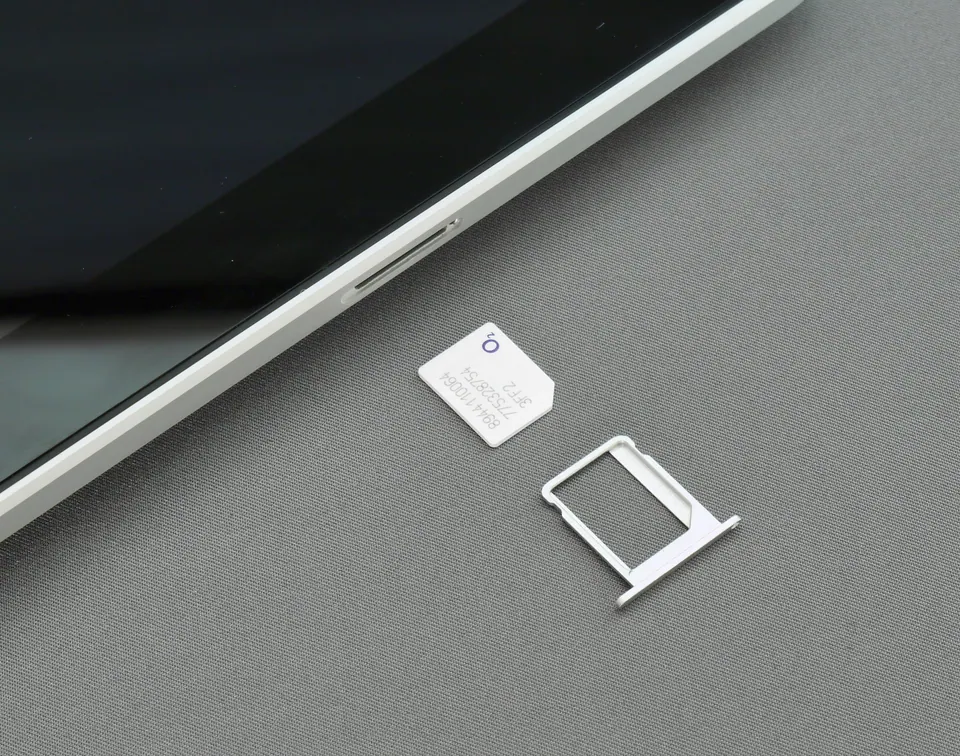
An eSIM is a digital way to activate a mobile subscription without inserting a physical SIM card. It describes the format, not the sort of company selling the plan. You can buy a destination operator's plan as an eSIM where that operator and your device support it. Your home subscription can also be an eSIM. Apple's eSIM explanation and directory of local and worldwide providers document these options.
That distinction changes the comparison. If a local operator offers a suitable eSIM, you may be able to get the local plan you want without visiting a shop for a card. Conversely, a travel eSIM's convenient installation says nothing by itself about how much data it includes, whether it has a phone number, or what happens when its high-speed allowance runs out. Those belong to the service contract.
There are three purchasing routes to investigate:
| Route | When to put it on the shortlist | The question that can change the decision |
|---|---|---|
| Your home provider's roaming service | The trip is short, usage is modest, or the destination is already included | What does this trip add to the bill, and what usage triggers it? |
| A destination operator's plan | You will stay in one country, need local calling, or expect substantial usage | Can a visitor buy the particular plan, and does it cover the whole stay? |
| A travel provider's country or regional plan | You want to arrange data before departure or cover several stops | Are the exact destinations and services included under workable limits? |
Treat this as an order of investigation, not a ranking. A local offer is not automatically cheaper. A regional plan is not automatically simpler if your last stop falls outside its coverage. Roaming is not automatically expensive if your home allowance already covers the journey. The right comparison starts with eligible plans that can perform the same job.
Establish what your phone can actually use
There are three separate checks: whether the exact device supports the format, whether it is allowed to use another provider, and whether it supports the combination of lines you intend to keep active. Passing one check does not settle the others.
For an iPhone, Apple says switching to another provider abroad requires an unlocked device and notes regional differences in eSIM support. Check the model and purchase region rather than relying on the phone family's name. Google's Pixel documentation similarly makes dual-SIM capabilities dependent on the device and carrier. Apple's travel requirements, Google's Pixel dual-SIM guidance.
The practical consequence is straightforward: do this before comparing discounts. If the intended setup is “keep my home number and add travel data,” verify that setup, not merely whether the phone has an Add eSIM option. Otherwise, you could buy a usable data plan that requires giving up a line you expected to retain.
Record the device model, purchase region and carrier-lock status once. Then use that information against each shortlisted provider's requirements. If compatibility remains unclear, resolve it before purchasing; a second cheap plan will not solve the same underlying device limitation.
Price the entire trip
Price per gigabyte is useful only after checking duration and eligibility. It does not tell you how much you must spend to remain connected until you leave.
Consider a 21-day trip on which you need data every day and expect to use 8 GB. These are invented packages with no taxes or additional fees:
| Illustrative package | Price | Data | Validity | Price per included GB | Purchase needed for 21 days |
|---|---|---|---|---|---|
| A | USD 8 | 5 GB | 7 days | USD 1.60 | Three packages: USD 24 |
| B | USD 20 | 10 GB | 30 days | USD 2.00 | One package: USD 20 |
Package A sells cheaper gigabytes. Package B covers this trip for USD 4 less, with two fewer replacement purchases.
The example assumes each replacement of A can begin when the previous one expires, remains available at the same price, and has enough data for that seven-day period. If you use 6 GB during the first week, three packages may no longer be enough. If your trip lasts only six days and uses 4 GB, one A package costs USD 8 and becomes the better fit. The comparison changes because the need changes, not because one package has become inherently better.
Two different limits are doing the work here: how much data you can use and how long you have to use it. Buying an allowance that looks generous for the whole journey does not help if its validity ends halfway through. Nor should you assume unused data rolls forward into a replacement package.
Use total required spending as the first price comparison. Include the packages or top-ups needed for the itinerary, mandatory charges, and any service you must retain separately. Use the same currency or state the conversion rate and date. Only then use price per gigabyte to distinguish offers that already meet the requirements.
For remote work, also decide what the mobile plan is for. If it is an emergency alternative to the accommodation's internet, budget for a plausible failed work session: perhaps one important call and sending the day's files. If it will be your main connection, estimate the working days, not just the time spent outside. Calling both purchases “a travel data plan” conceals a substantial difference in the service you need.
Keep internet access and access to your number separate
A data connection gives compatible internet apps a route online; it does not, by itself, provide voice or SMS service for your existing phone number. Airalo's guidance describes using another active line for those services alongside a data-only eSIM and warns that the home provider's conditions and charges still apply. Airalo's explanation of calls and SMS with a data-only plan.
Imagine that a work account requires a code sent to your home number. Buying more travel data does not answer how you will receive that code. Likewise, if someone needs to reach you through an ordinary call to that number, agreeing to use a messaging app with everyone else does not solve this particular dependency.
Before departure, identify the few services where the number matters: account sign-in, account recovery and people who must be able to call you. Decide whether the home line needs to remain available, or whether those dependencies can be resolved in advance through options the account or service actually supports. Do not discover the dependency after disabling the line.
If you keep the home line active, establish its charges for your intended actions. Receiving an SMS, answering a voice call, retrieving voicemail and making a Wi-Fi call are separate questions. The fact that travel data works does not settle their billing. Apple's travel guidance also warns that home-line roaming charges may remain possible with both subscriptions active. Apple's international eSIM guidance.
For a short holiday, this may be a five-minute tariff check. For someone taking work calls or relying on number-based authentication, it is part of choosing the service. Put the answer beside the data price so you can compare the complete setup.
“Unlimited” needs to be translated into a working day
An unlimited allowance and unlimited high-speed use are different promises. Airalo's published unlimited-data policy currently gives a default daily high-speed threshold of 3 GB, followed by a reduction to 1 Mbps; particular packages can have different thresholds. Its policy also describes personal-use restrictions and network management. Those conditions need to be considered before treating a package as a work connection. Airalo's unlimited-data fair-use policy.
The consequential question is what you still need to do after reaching a threshold. Continued access may be enough to send a message about a delayed delivery. It may be a poor match for the delivery itself.
Here is a calculation to make that distinction tangible. At a sustained payload transfer rate of 1 Mbps, transferring a decimal 1 GB takes 8,000 seconds—about two hours and thirteen minutes. At 10 Mbps, the same idealized transfer takes about thirteen minutes. These are unit conversions, not measurements of a provider. Actual completion can take longer because the available rate varies and network overhead consumes capacity.
If a deadline is twenty minutes away, “you still have internet” is not enough information. You need to know whether the remaining connection can perform the task in time. That is why a headline allowance should never be the only comparison for a working trip.
Check laptop use separately as well. Hotspot permission answers whether sharing is allowed; it does not establish what high-speed allowance remains, whether there is a separate tethering cap, or whether the connection meets your employer's requirements. Read the selected plan's conditions for the work you intend to do.
It is reasonable to prefer a finite allowance with clear terms over an unlimited offer whose post-threshold behavior does not suit your workload. It is equally reasonable to choose unlimited data if its stated limits fit. The judgment comes from matching the conditions to your busiest likely day.
Time the installation and the start of validity
An eSIM can be present on a phone before its paid validity begins, but that is not universal. Airalo says a package's validity can start at installation or on connecting to a supported network, depending on the package. The selected package's policy determines which applies. Airalo's validity explanation.
That difference matters when preparing early. If a hypothetical 30-day package starts at installation and you install it ten days before departure, roughly ten of those days are gone before the trip begins. Preparing early has consumed part of the service you bought. If validity instead begins at the destination network, the calculation is different.
Plan preparation around the actual trigger. Before buying, establish when the package must be installed or activated, what starts its clock, and whether its validity reaches the return date. A useful note is a sentence: “This plan starts when X happens, so I will do X on this date.” It is more reliable than treating all installation instructions as interchangeable.
Keep access to the instructions and the support route available before departure. That preparation is particularly valuable when the travel plan is intended to be your first connection after arrival: you do not want the only explanation of how to get online to depend on already being online.
Configure the lines according to their jobs
With two subscriptions on one phone, “roaming on or off?” is incomplete. You need to identify which line the setting applies to. Saily's instructions, for example, require roaming on its eSIM for the service to work. That is not an instruction to enable roaming on your home subscription. Saily's setup guidance.
Assign each line a clear job and label: the one intended for travel data, and any line retained for calls or texts. Then select the corresponding defaults. The label is there to reduce mistakes when making changes; it is not proof that the phone has selected the correct line.
Also inspect any automatic data-switching setting. Apple's dual-SIM documentation describes circumstances where voice calls and data switching interact. Google's Pixel instructions likewise distinguish data preferences and model-specific call behavior. A blanket recommendation to disable every switching option can therefore have consequences beyond billing. Apple's dual-SIM instructions, Google's Pixel instructions.
For the intended setup, establish which line supplies data, what happens during a call on the other line, and which services might incur charges. After arrival, check the line preferences and try the tasks that matter before a scheduled call. If the laptop is part of the plan, confirm its connection too. Successful installation is a useful milestone; successful use of the intended setup is the more valuable check.

How the choice changes across three trips
These scenarios illustrate a decision process. They are not product recommendations or reports of travel experience.
A five-day visit with light phone use
Suppose you mainly need directions, messages and occasional browsing, and expect to use Wi-Fi for large transfers. Begin by finding out whether the home tariff already covers the destination and usage. If it does, buying another plan may add complexity without reducing the bill.
If roaming costs extra, compare the whole five-day charge with an eligible travel or local offer. Then decide whether the saving justifies setup and managing the home line. For this trip, paying a modest amount more for an arrangement you understand can be a rational choice. There is little benefit in optimizing a unit price for data you will never use.
A month in one country with regular work calls
Here, the choice deserves a closer look at local operators as well as travel providers. Compare visitor eligibility, full-month validity, calling needs and the conditions for laptop use. A plan designed around occasional phone browsing may be inadequate even when its total allowance looks generous.
Separate normal work from recovery after an outage. If the accommodation's Wi-Fi fails for an afternoon, what must the mobile connection sustain? Compare that workload against the allowance and any speed threshold. Decide in advance which tasks can wait and which require another connection. A small saving on the main plan should not consume the entire budget available for recovering from a failed call or delayed upload.
Several countries on one itinerary
Start with a regional offer's actual country list, then check it against the route stop by stop. The region in the product name is a label; the included destinations are the purchasing condition. One excluded stop means the quoted price does not cover the whole trip.
Now compare that complete cost against separate country plans. A regional package may justify a higher price if it reduces purchases and configuration changes. Separate plans may still fit better if one stop is much longer or has substantially different work requirements. Keep the home-number question in view across all of them.
Choose the plan whose documented conditions cover your dates, destinations and essential tasks, at a total cost you accept. Before paying, write down how you will retain any essential number access and what you will do if the connection fails. That gives you a usable travel setup, rather than a purchase you still have to figure out at the airport.
Once the format decision is clear, check what can still trigger a charge on your home line. If you are staying for a month, use the fixed-data eSIM comparison to test whether the allowance and validity fit your trip; the cheapest format is not necessarily the cheapest usable arrangement.
Sources and method: This is an analysis of published manufacturer and provider documentation, checked on October 11, 2026. Links beside the relevant claims identify the supporting documents. Prices and traveler scenarios are hypothetical; transfer times are calculations, not speed tests. We have not independently measured these services or verified their performance at a particular destination. Recheck the specific package and home tariff before purchase.