A roaming bill is not simply the price of being abroad. It is the price of specific activity on a particular line, under a particular plan. That distinction explains why two people can travel together, use their phones for roughly the same amount of time and return to different bills.
The useful question before departure is therefore not “Have I turned roaming off?” It is “Which line will carry my data, what can still happen on my home line, and what starts a charge?” A travel eSIM can solve the first problem without solving the other two.
Separate the three services your phone uses
Mobile data, ordinary calls and carrier text messages are different services. Selecting a travel line for internet access does not, by itself, establish what your home carrier will charge for an answered call. Similarly, reading a message in an internet messaging app is not the same transaction as sending an ordinary SMS.
Start by deciding whether you actually need your home line active. Someone awaiting verification texts may want to retain it; someone with alternative account recovery and no need for incoming calls may prefer to disable it for the trip. Neither choice is universally right. Disabling the line reduces the number of services that can surprise you, but it also removes access you may have been relying on.
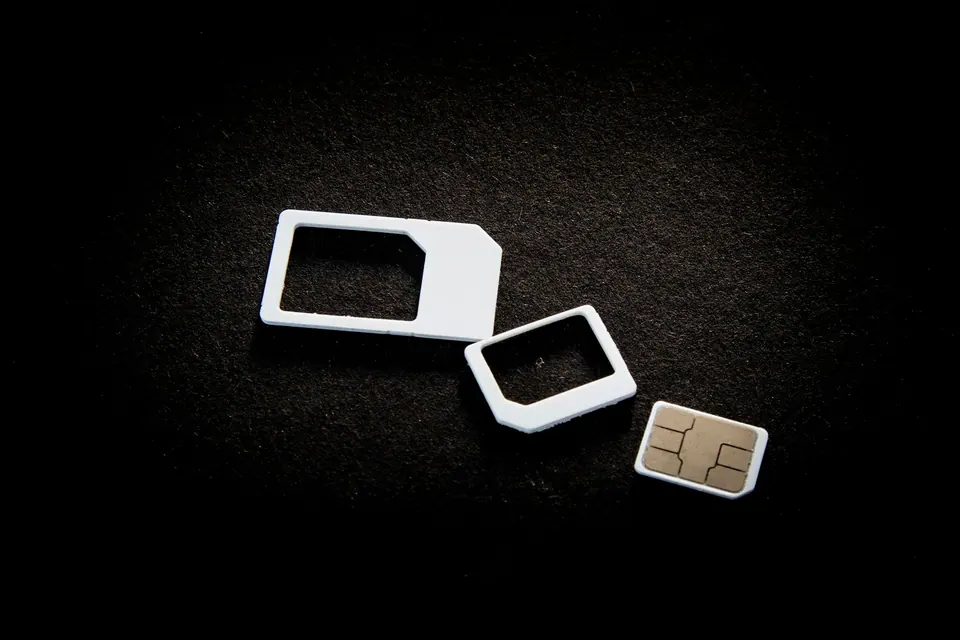
Write down the intended arrangement in plain language: “Travel line for data; home line retained for a specified purpose.” Then check whether the phone's settings and your tariff support that arrangement. Our SIM and eSIM guide explains the difference between the service you buy and the format in which it arrives.
A daily pass starts with an event, not necessarily with arrival
AT&T's International Day Pass provides a useful example of why the trigger matters. Its published rules say eligible data use, talking or sending a text starts a 24-hour period; incoming texts do not trigger the daily charge. Background data can start it, even if you have not deliberately opened an app. Those are AT&T's rules for that product, not a universal description of international roaming. AT&T's Day Pass terms
The practical consequence is that “I only used my phone for a moment” may be irrelevant. A pass usually sells access for a charging period, not a discount proportional to your attention. A tiny background transfer can matter financially in a way that a much larger transfer later in the same paid period does not.
Before leaving, look for a sentence that defines the first chargeable event. If the carrier's sales page says only “use your plan abroad,” open the tariff or support document. Ask separately about receiving a call, sending an SMS, receiving an SMS, voicemail retrieval and background data. A yes-or-no answer about “using the phone” is too broad to be useful.
Find out what “a day” means
A day may be a rolling period or a calendar-based window. Telstra distinguishes between Upfront plans, where its International Day Pass runs for 24 hours from first eligible use, and Non-Upfront plans, where inclusions expire at 11:59 p.m. Australian Eastern Standard Time (AEST). That cutoff is an Australian billing clock, not midnight wherever you are traveling. Identify the plan type before applying either rule. Telstra international roaming
Consider a hypothetical calendar-day pass costing 12 currency units. You use it at 11:50 p.m. under the provider's billing clock, then again at 12:10 a.m. Two chargeable days could cost 24 units for activity only twenty minutes apart. A rolling 24-hour product would treat that timing differently. These are invented prices illustrating the mechanism, not a Telstra quote.
The relevant clock may also differ from the clock where you are sitting. If you are comparing a daily pass with a prepaid data package, mark the expected active charging periods on your itinerary. Do not simply multiply the advertised daily figure by hotel nights.
A billing cap is not automatically a trip cap
Read the unit attached to any maximum: per line, per account, per billing period, per trip or per destination category. These phrases are not interchangeable.
For example, AT&T's published land-and-air Day Pass rules cap daily fees at ten per line per bill period; sea use has separate conditions. A trip crossing a bill-period boundary therefore needs a different calculation from one entirely within the same period. The document also distinguishes Wi-Fi calls to US numbers from calls to non-US numbers. AT&T's applicable conditions
This is why the home bill date belongs in the comparison, alongside departure and return. It can change the cost without changing your itinerary at all. For a family, repeat the calculation for each line: a shared account is not evidence of a shared roaming allowance.
Canadian readers should also distinguish a daily roaming product from a duration-based travel pass. Rogers describes both arrangements, including passes covering a set number of days. The product already attached to your account may not be the one most prominently advertised today. Rogers' roaming guidance
Wi-Fi is not a blanket billing exemption
An internet call inside an app and your carrier's Wi-Fi Calling feature are different services. The latter still uses your telephone service and its charging rules. Check the destination of the number you are calling, not only your physical location or the network icon on the screen.
The same discipline applies to voicemail. Rather than assume that every unanswered call is free or that every voicemail event is chargeable, ask your carrier about your configuration: incoming calls, forwarding, retrieving messages and visual voicemail. Keep the response with the tariff you relied on. This is one of the places where a confident general rule is less valuable than a precise account-specific answer.
For work, decide beforehand which channel colleagues should use. Giving them one approved internet meeting link can reduce the temptation to answer an ordinary roaming call without considering its consequences. It does not replace an emergency communication plan.
Check borders, transit and the journey between countries
A destination list should match every place the phone may connect, including stopovers. “Europe” on a marketing page is not a complete country list. Ships and aircraft can also involve services outside the land-based package you were comparing.
Ofcom's UK guidance specifically warns about accidental connections to networks across borders and potentially higher charges at sea. It also explains roaming notifications and the importance of checking the package before travel. Those consumer protections are useful, but a welcome text is not a substitute for making the decision beforehand. Ofcom's guide to using a mobile abroad
Keep a plan for periods when you do not intend to use any cellular service. If you choose airplane mode, remember that reconnecting Wi-Fi is a separate action and that carrier Wi-Fi Calling may still require attention. Follow the device's instructions rather than assuming one icon describes every active service.

The five answers to take with you
You do not need a folder full of marketing brochures. You need a small, readable record:
| Question | What to record |
|---|---|
| What starts payment? | Data, outgoing and incoming calls, SMS and relevant background services |
| When does payment reset? | Rolling period or named calendar clock |
| What is included? | Exact countries, data allowance and permitted call destinations |
| Where does the limit apply? | Line/account, billing period and excluded services |
| What happens if I exceed it? | Blocking, reduced speed, a top-up or additional charges |
Save the plan name and date with those answers. If customer support confirms an exception, retain the confirmation rather than relying on memory.
On return, restore your normal data line deliberately and inspect usage and billing records when they become available. A phone working normally is not evidence that it used the intended line throughout the trip. The goal is not to avoid roaming at all costs; it is to pay for it intentionally when its convenience is worth the price.
If your home number stays active for verification messages, prepare an account-recovery route that does not depend on that phone. For a multi-country itinerary, the Canada-to-Europe connectivity guide shows how country coverage and billing periods change the comparison.
Research note: carrier examples checked on 11 October 2026. This is a billing guide, not a quote for your account. The numerical scenario is hypothetical; no carrier account or overseas connection was tested.